

Eco-Friendly Bag Materials: Market Opportunities for Sustainable Bags

Sustainability is no longer just a buzzword—it’s a major driver of consumer purchasing decisions across the globe. More and more shoppers are willing to pay a premium for products made with environmentally responsible materials, and the bag industry is no exception.
For brands and retailers, offering sustainable bags is both an ethical choice and a smart business move.
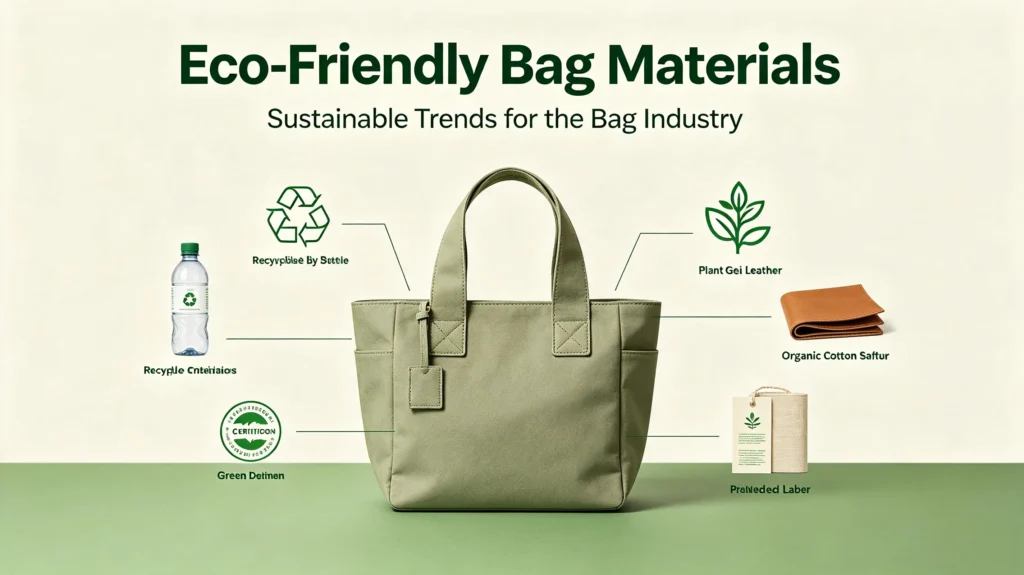
There are several fast-growing eco-friendly bag materials to consider. Recycled polyester (rPET), made from plastic bottles, is one of the most accessible options. It has the same durability and performance as virgin polyester but uses far less water and energy to produce. It’s widely available, cost-competitive, and works for everything from tote bags to backpacks.
Vegan leather alternatives are also booming. High-quality plant-based leathers made from cork, pineapple fiber, and mushroom mycelium are gaining traction in the premium market. For most mid-market brands, recycled PU and bio-based PU offer a more affordable vegan option with a very similar look and feel to animal leather.
Organic cotton canvas and hemp are popular natural fiber options. They’re biodegradable, renewable, and have a classic, casual aesthetic that works great for tote bags, shopper bags, and casual backpacks. Many brands also opt for natural dyes and water-based glues to reduce environmental impact further.
The market opportunity is clear: sustainable bags appeal to eco-conscious consumers, help brands meet ESG goals, and open doors to retail partners that require sustainable sourcing.
At Baifei Bags, we offer a full range of eco-certified materials and can help you build a sustainable bag line that fits your budget and brand values. Reach out to learn more about our sustainable material options.